Stars

How the 'Anti-Social' Supernova Explosion SN 2024bch Debunks Science

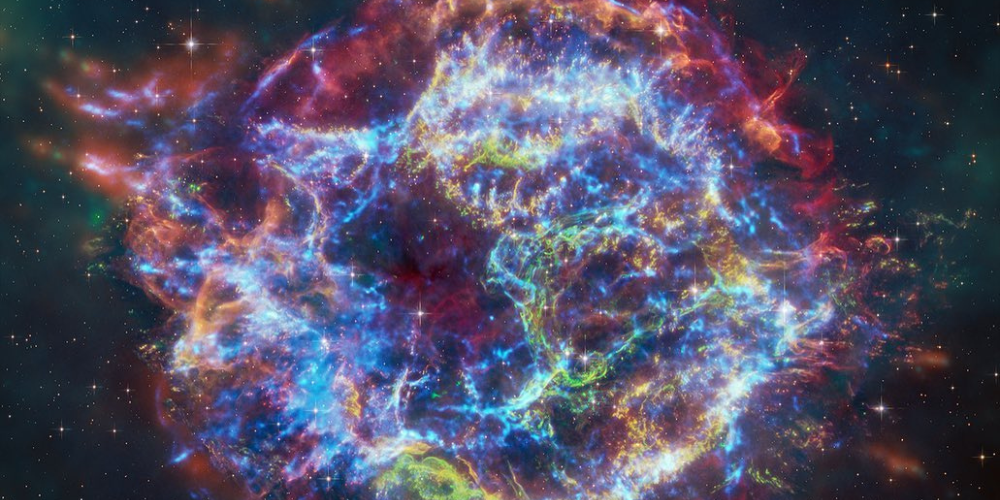
A massive star recently exploded in a way that has astronomers questioning how supernovae release their energy. This event, designated as SN 2024bch, occurred approximately 65 million light-years away from Earth and was first observed in February 2024. It is a Type II supernova, which occurs when a star’s iron core collapses after nuclear fusion stops. Shockwaves then rip through the star’s outer layers, ejecting them into space. Normally, the energy from these explosions comes from the star’s ejected material slamming into the dense gas surrounding it, called the circumstellar medium. This collision creates narrow emission lines in the light spectrum. SN 2024bch, however, appears unusual. A Supernova That Breaks the Rules Astronomers describe SN 2024bch...
Read More
Stars

Discovery of Ice Around Baby Stars Offers Clues to Earth’s Water Origins

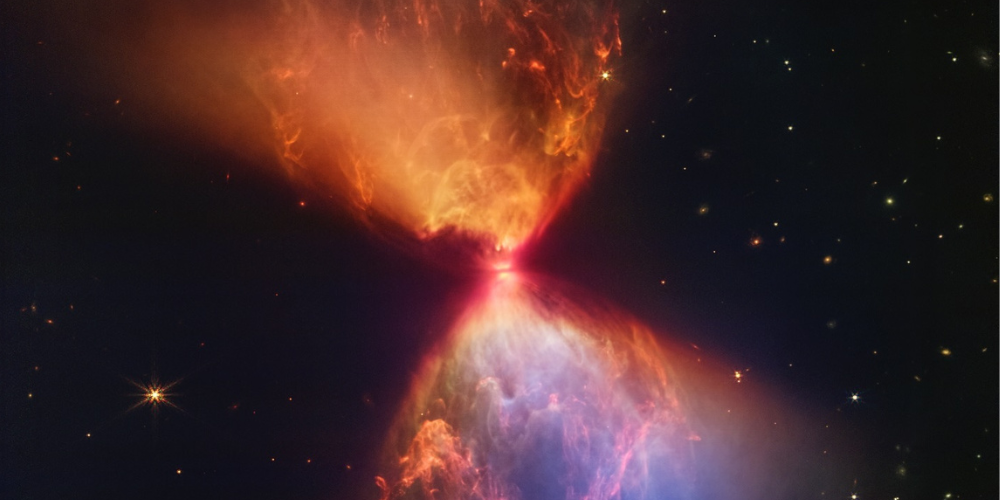
Water is fundamental to life, but its journey to Earth has long puzzled scientists. Observing ice around infant stars could provide crucial clues about where our planet’s water came from. Recent studies using the James Webb Space Telescope (JWST) are revealing how the water in star-forming regions might resemble the water on Earth, helping scientists understand how planets can become habitable. The Role of Semi-Heavy Water One key to uncovering the origins of Earth’s water lies in semi-heavy water, or HDO. In this molecule, one hydrogen atom is replaced by deuterium, a heavier version of hydrogen containing a neutron. Water with a higher HDO-to-H2O ratio typically forms in extremely cold environments, like the dense clouds of...
Read More
Stars

How Do Some Stars Grow So Large? The Science of Cosmic Giants

Stars are the engines of the universe, shaping galaxies, creating heavy elements, and dazzling the night sky. Yet, some stars stand out for their sheer size—so large that they could swallow entire planetary systems. These cosmic giants spark curiosity: how do stars grow so enormous, and why do they not all reach such extremes? The answer lies in the physics of stellar life cycles, where mass, fusion, and radiation determine their fate. The Largest Stars Known One of the most famous contenders for the title of the biggest star is VY Canis Majoris, a red hypergiant about 6,000 light-years away. Its size is staggering—more than 1,500 times the diameter of the sun. Placed in our solar...
Read More
Stars

Mysterious “Dark Main Sequence” Stars Might Exist at the Galaxy’s Core

At the heart of the Milky Way, where stars orbit dangerously close to a supermassive black hole, some of them may be living on borrowed time—or not aging at all. New research explores an extraordinary idea: certain stars near the galactic center might be powered not by fusion alone, but by the energy released from collisions between dark matter particles and their antimatter counterparts. This concept doesn’t just challenge conventional models—it reshapes what we understand about stellar evolution. What Shapes a Star's Life? The foundation of a star’s life lies in its mass. Mass determines how quickly a star burns hydrogen, when it moves on to heavier elements, and how it ultimately fades. The "main sequence"...
Read More
Stars

Change Is Coming for These Two Zodiac Signs—Are You One of Them?

Life rarely stays in a straight line, and this week, two zodiac signs are about to feel that truth more than ever. Aries and Pisces are entering a stretch filled with surprise shifts, fresh opportunities, and internal tests. Whether it’s a career jolt or a subtle nudge toward personal growth, both signs could experience moments that disrupt their routines—but in a way that ultimately leads to growth. When astrology signals change, it’s not always chaos—it can also be a call to reframe and realign. And this week, Aries and Pisces are in the cosmic spotlight. Unexpected Momentum for Aries For Aries, this week isn’t just about fast moves or bold leaps—it’s about measured courage. While a...
Read More
Stars

Gemini Zodiac Sign - Key Traits, Love Life & Compatibility Guide

Gemini brings a unique kind of energy to the zodiac. With birthdays spanning from May 21 to June 21, this air sign is ruled by Mercury—the planet known for swift communication and intellect. Represented by twins Castor and Pollux, Gemini naturally embodies duality. They move effortlessly between perspectives, balancing logic and creativity in a way that keeps everyone guessing. Always seeking something new, Gemini rarely stays in one place for long. Whether switching topics mid-sentence or moving between friend groups, their energy keeps things dynamic. It’s this vibrant, curious nature that often earns Gemini a reputation as the most social sign in the zodiac. The Mind Behind the Wit Gemini operates with remarkable mental speed. Conversations...
Read More

Why Most of the Universe’s Matter Isn’t in Stars or Galaxies

December 18, 2025
Helen Hayward

The universe often appears to us as a glittering sea of stars, planets, and galaxies. Because these luminous objects fill the images we see, it’s natural to think they house most of the matter in the cosmos. But in truth, only a small slice of ordinary, atom-based matter exists inside them. The majority is distributed across vast, nearly empty regions.

Thanks to recent studies, astronomers are beginning to map where this hidden matter actually resides.

The Small Share Held by Stars and Galaxies

The Big Bang theory predicts that roughly 5% of the universe consists of atoms. Stars might seem the obvious repositories. Galaxies host hundreds of billions of stars, and the observable universe contains around 10²³ stars—far outnumbering every grain of sand on Earth. Despite this, the total atoms in stars is modest.
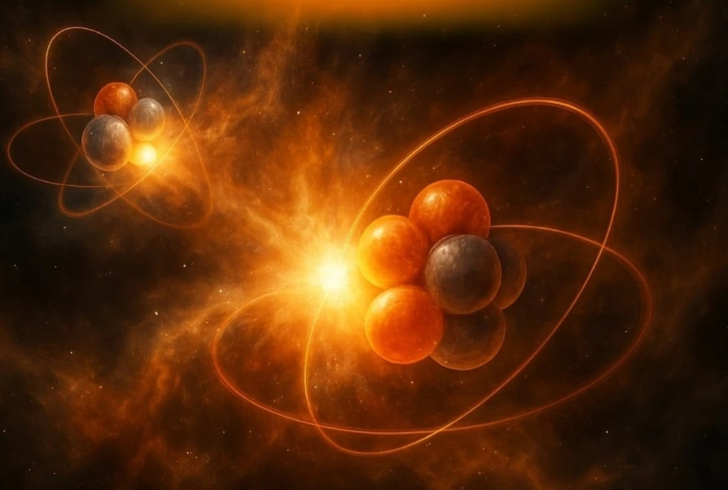
Instagram | sciencewithjahir | The vast majority of atomic matter lies beyond stars and galaxies.

Highlights include:

  1. Stars contain only 0.5% of matter.
  2. About 0.03% of matter consists of heavier elements, like carbon and oxygen.
  3. The universe has roughly 10⁸² atoms, most of which aren’t in visible structures.

This leaves a vast amount of ordinary matter unaccounted for—scattered far beyond the glowing cores of galaxies.

The Vast Reservoir Between Galaxies

The intergalactic medium—the space between galaxies—is the most likely hiding place. Often called a vacuum, it is far from empty. This region hosts faint, wispy filaments known as the cosmic web. Though its average density is only about one atom per cubic meter—a fraction of anything on Earth—the immense scale of the universe gives this matter significant mass.

This medium also reaches temperatures of millions of degrees, making it glow primarily in X-rays. Most X-ray telescopes lack the sensitivity needed to map this thin, hot gas with precision, which is why so much ordinary matter remained undetected for decades.

Radio Bursts as a New Measuring Stick

A breakthrough came from studying mysterious cosmic signals known as fast radio bursts (FRBs). These bursts release as much energy in a single millisecond as the Sun emits in three days. Since their first discovery in 2007, researchers have traced them to the surroundings of ultra-dense neutron stars.

A specific type, called a magnetar, is believed to generate many of these bursts. Magnetars possess magnetic fields a thousand trillion times stronger than Earth’s, making them some of the most extreme objects known.

As FRBs travel across the universe, electrons in intergalactic gas slow the longer wavelengths of their radio waves. This stretching of the signal acts like a measurement tool. By analyzing how much the wavelengths spread, astronomers can estimate how much gas each burst passed through on its journey to Earth.

Completing the Inventory of Ordinary Matter
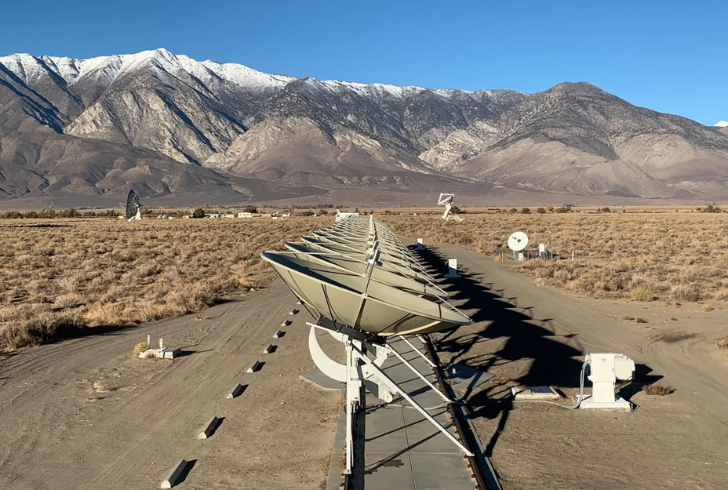
edition.cnn.com | Fast radio bursts confirm the Big Bang model’s predicted 5% distribution of normal matter.

A major study released in June 2025 by scientists from Caltech and the Harvard Center for Astrophysics used 69 fast radio bursts collected with an array of 110 radio telescopes in California. Their findings clarified where the universe’s matter is distributed:

1. 76% lies in the intergalactic medium.
2. 15% resides in halos around galaxies.
3. 9% sits inside galaxies as stars and cold gas.

This distribution matches the Big Bang model’s predictions almost exactly. Recovering the expected 5% of normal matter serves as a powerful confirmation of the theory’s accuracy.

As new radio telescope arrays come online, the number of detected bursts is expected to rise to 10,000 per year. With such large samples, FRBs may soon help map the three-dimensional structure of the cosmic web itself.

What About the Rest of the Universe?

Although the distribution of ordinary matter is now fully mapped, most of the universe consists of mysterious components. Dark matter, which makes up about 27% of the cosmos, functions like an invisible skeleton that shapes galaxies. Its effects are visible through gravitational lensing, where light bends more strongly than visible matter alone could explain, indicating that dark matter outweighs ordinary matter by over five times.

Meanwhile, dark energy is the enigmatic force accelerating the universe’s expansion. Together, these unseen elements dominate the universe, yet their true nature remains elusive. Ordinary matter—everything made of atoms—forms just a tiny portion, much of it floating in the vast spaces between galaxies. Thanks to fast radio bursts and new observational techniques, astronomers can now trace this hidden matter with unprecedented clarity.

While dark matter and dark energy remain mysteries, the case of the universe’s missing atoms has finally been closed.


Previous page | Next page

you may like

taboola

taboola

taboola

More from

Your Weekly Horoscope – 22 to 28 December, 2025

What Does 2026 Have in Store for Sagittarius?

Your Weekly Horoscope – 15 to 21 December, 2025

Your Weekly Horoscope – 8 to 14 December, 2025

A Sagittarius Spiritual Energy Guide for Inner Peace And Self-Discovery

You May Also Like

Your Weekly Horoscope – 22 to 28 December, 2025

Read More

What Does 2026 Have in Store for Sagittarius?

Read More

Your Weekly Horoscope – 15 to 21 December, 2025

Read More

Your Weekly Horoscope – 8 to 14 December, 2025

Read More

A Sagittarius Spiritual Energy Guide for Inner Peace And Self-Discovery

Read More

you also may

like

How the 'Anti-Social' Supernova Explosion SN 2024bch Debunks Science

Read More

you also may

like

Discovery of Ice Around Baby Stars Offers Clues to Earth’s Water Origins

Read More

you also may

like

How Do Some Stars Grow So Large? The Science of Cosmic Giants

Read More

in the same category

  • Stars

How the 'Anti-Social' Supernova Explosion SN 2024bch Debunks Science

Read More

Discovery of Ice Around Baby Stars Offers Clues to Earth’s Water Origins

Read More

How Do Some Stars Grow So Large? The Science of Cosmic Giants

Read More
  • About Us
  • Contact Us
  • Privacy Policy
  • Terms Of Use
Menu
  • About Us
  • Contact Us
  • Privacy Policy
  • Terms Of Use
© 2022 FreeAstrologers.com
  • Stars
  • cosmic
  • meaning
  • Guides
Menu
  • Stars
  • cosmic
  • meaning
  • Guides

© 2022 FreeAstrologers.com