Stars

How the 'Anti-Social' Supernova Explosion SN 2024bch Debunks Science

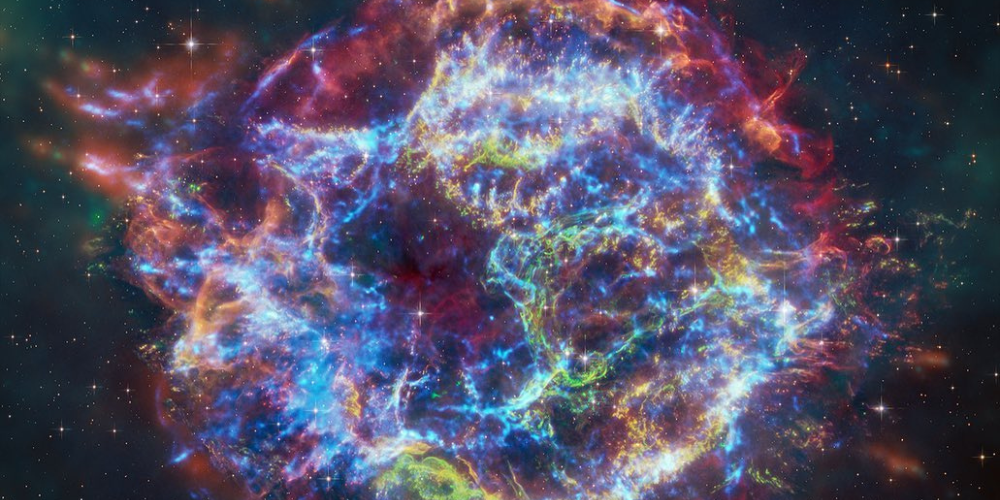
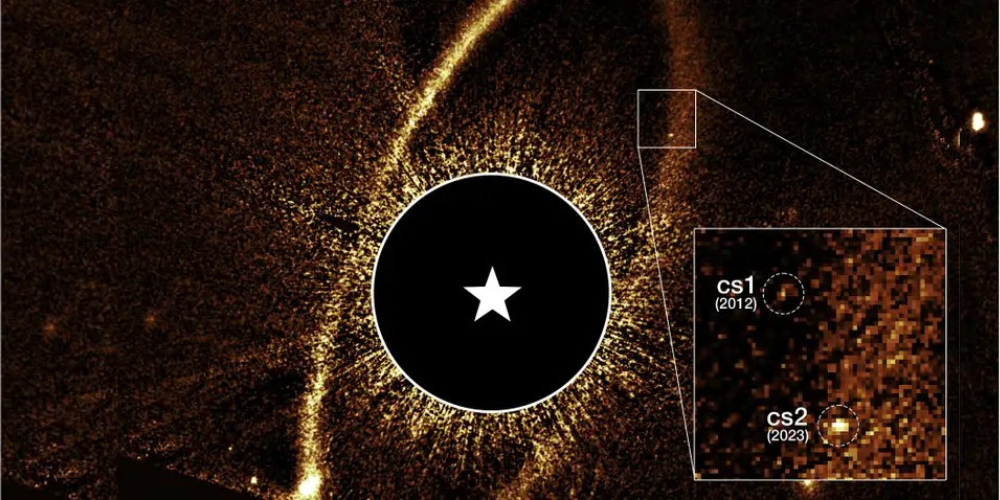
A massive star recently exploded in a way that has astronomers questioning how supernovae release their energy. This event, designated as SN 2024bch, occurred approximately 65 million light-years away from Earth and was first observed in February 2024. It is a Type II supernova, which occurs when a star’s iron core collapses after nuclear fusion stops. Shockwaves then rip through the star’s outer layers, ejecting them into space. Normally, the energy from these explosions comes from the star’s ejected material slamming into the dense gas surrounding it, called the circumstellar medium. This collision creates narrow emission lines in the light spectrum. SN 2024bch, however, appears unusual. A Supernova That Breaks the Rules Astronomers describe SN 2024bch...
Read More
Stars

Discovery of Ice Around Baby Stars Offers Clues to Earth’s Water Origins

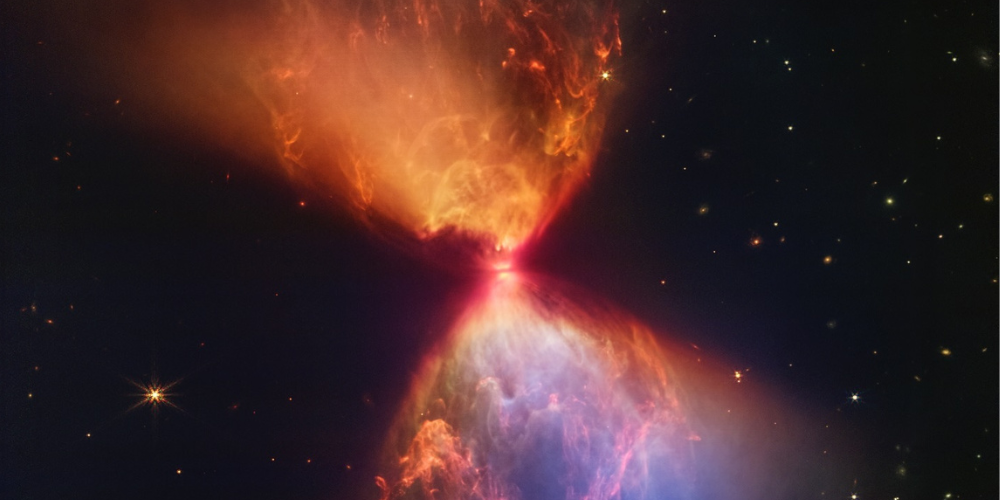
Water is fundamental to life, but its journey to Earth has long puzzled scientists. Observing ice around infant stars could provide crucial clues about where our planet’s water came from. Recent studies using the James Webb Space Telescope (JWST) are revealing how the water in star-forming regions might resemble the water on Earth, helping scientists understand how planets can become habitable. The Role of Semi-Heavy Water One key to uncovering the origins of Earth’s water lies in semi-heavy water, or HDO. In this molecule, one hydrogen atom is replaced by deuterium, a heavier version of hydrogen containing a neutron. Water with a higher HDO-to-H2O ratio typically forms in extremely cold environments, like the dense clouds of...
Read More
Stars

How Do Some Stars Grow So Large? The Science of Cosmic Giants

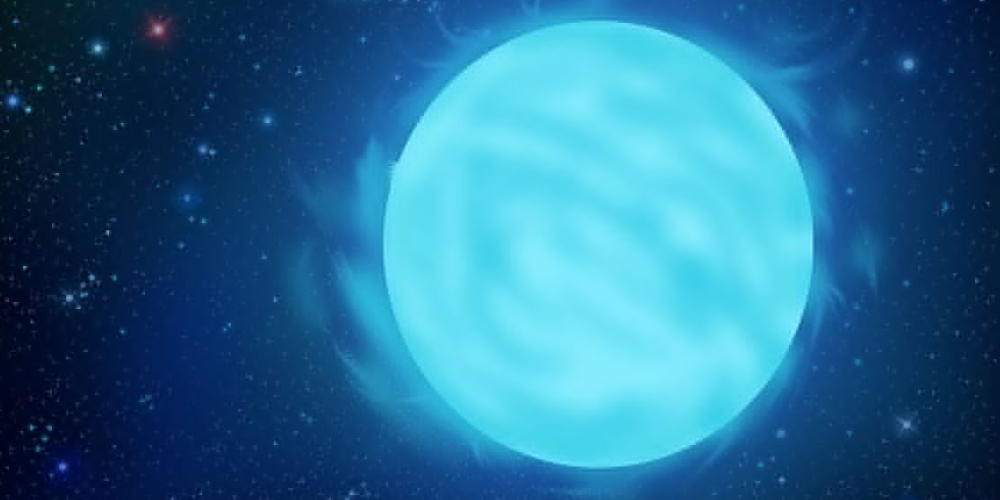
Stars are the engines of the universe, shaping galaxies, creating heavy elements, and dazzling the night sky. Yet, some stars stand out for their sheer size—so large that they could swallow entire planetary systems. These cosmic giants spark curiosity: how do stars grow so enormous, and why do they not all reach such extremes? The answer lies in the physics of stellar life cycles, where mass, fusion, and radiation determine their fate. The Largest Stars Known One of the most famous contenders for the title of the biggest star is VY Canis Majoris, a red hypergiant about 6,000 light-years away. Its size is staggering—more than 1,500 times the diameter of the sun. Placed in our solar...
Read More
Stars

Change Is Coming for These Two Zodiac Signs—Are You One of Them?

Life rarely stays in a straight line, and this week, two zodiac signs are about to feel that truth more than ever. Aries and Pisces are entering a stretch filled with surprise shifts, fresh opportunities, and internal tests. Whether it’s a career jolt or a subtle nudge toward personal growth, both signs could experience moments that disrupt their routines—but in a way that ultimately leads to growth. When astrology signals change, it’s not always chaos—it can also be a call to reframe and realign. And this week, Aries and Pisces are in the cosmic spotlight. Unexpected Momentum for Aries For Aries, this week isn’t just about fast moves or bold leaps—it’s about measured courage. While a...
Read More
Stars

Gemini Zodiac Sign - Key Traits, Love Life & Compatibility Guide

Gemini brings a unique kind of energy to the zodiac. With birthdays spanning from May 21 to June 21, this air sign is ruled by Mercury—the planet known for swift communication and intellect. Represented by twins Castor and Pollux, Gemini naturally embodies duality. They move effortlessly between perspectives, balancing logic and creativity in a way that keeps everyone guessing. Always seeking something new, Gemini rarely stays in one place for long. Whether switching topics mid-sentence or moving between friend groups, their energy keeps things dynamic. It’s this vibrant, curious nature that often earns Gemini a reputation as the most social sign in the zodiac. The Mind Behind the Wit Gemini operates with remarkable mental speed. Conversations...
Read More
Stars

Astronomers Discover Surprising Feature in the ‘Music’ of Flickering Stars

For centuries, stars have sparked questions about the universe’s structure. While much attention falls on their brightness and composition, scientists now listen to them—literally. Through the study of stellar sounds, astronomers explore vibrations within stars that carry deep clues about their age, structure, and evolution. Recent findings from the M67 star cluster, located nearly 3,000 light-years away, show that these internal "songs" don’t just echo through space—they tell intricate stories. Using Kepler’s K2 mission data, researchers tracked stellar activity throughout a star’s giant phase, revealing a surprising behavior that alters previous understanding of star evolution. What Makes Stars Sing? Most stars—including the Sun—feature turbulent outer layers filled with boiling gas. As bubbles of gas rise and...
Read More

Mysterious “Dark Main Sequence” Stars Might Exist at the Galaxy’s Core

July 31, 2025
Helen Hayward

At the heart of the Milky Way, where stars orbit dangerously close to a supermassive black hole, some of them may be living on borrowed time—or not aging at all. New research explores an extraordinary idea: certain stars near the galactic center might be powered not by fusion alone, but by the energy released from collisions between dark matter particles and their antimatter counterparts.

This concept doesn’t just challenge conventional models—it reshapes what we understand about stellar evolution.

What Shapes a Star’s Life?
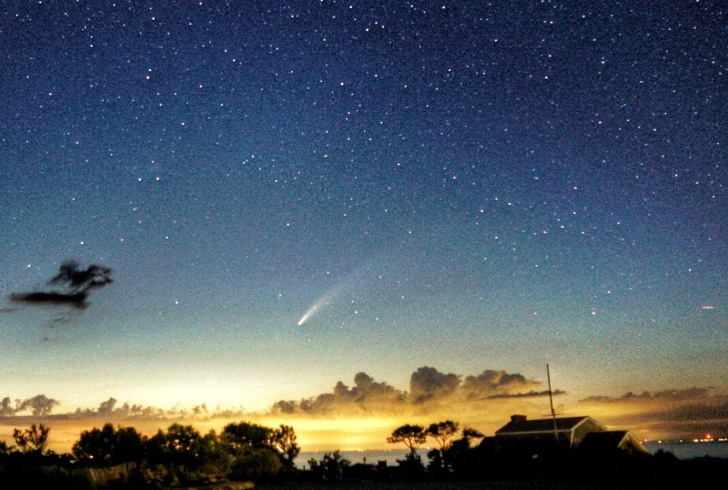
Instagram | jeffkenipulver | A star’s entire evolution, from burning hydrogen to its final fade, is controlled by its mass.

The foundation of a star’s life lies in its mass. Mass determines how quickly a star burns hydrogen, when it moves on to heavier elements, and how it ultimately fades. The “main sequence” is a chart astronomers use to map out these life stages. It’s a trusted system based on how stars produce energy through nuclear fusion.

But what if there’s another energy source in play? One that’s constant, independent of fusion, and only available in very specific places—like the dense, dark-matter-filled region near the Milky Way’s core?

Dark Matter’s Unseen Influence

Although dark matter has never been directly detected, scientists widely believe it’s made of elementary particles. If true, it likely includes both matter and antimatter versions. When these particles meet, they annihilate each other and release energy.

Under normal conditions, those collisions are rare. But at the galactic center—where dark matter is concentrated more densely than anywhere else in the galaxy—the rate of annihilation could be high enough to change how nearby stars behave.

At one point, excess radiation was observed in that area, and many suspected dark matter was the cause. That theory was eventually ruled out for that specific radiation, but the larger question remained: what could this type of energy do to stars orbiting close to the black hole?

Rewriting the Main Sequence

Three astrophysicists—Isabelle John, Rebecca Leane, and Tim Linden—ran detailed simulations to explore what happens when stars absorb energy from dark matter annihilations. Their work modeled stars ranging from 1 to 20 times the Sun’s mass and inserted them into a high-density dark matter environment near the galactic core.

These stars didn’t start their lives there. They likely formed farther out and migrated inward over time due to gravitational interactions. As they reached the center, the stars began absorbing dark matter energy in addition to their usual fusion output.

Two collision frequencies were modeled to account for how often dark matter particles might collide. This extra energy was layered onto the fusion output, and the stars were allowed to evolve within this new energy-rich context.

What Happens to the Stars?

The effect on these stars depends heavily on their mass and average distance from the galactic center:

1. Lower-mass stars

These could receive so much energy from dark matter that their fusion processes nearly shut down. They appear much younger than they are, essentially reversing along the main sequence.

2. Moderate-mass stars

Some were pushed beyond the threshold where they could remain stable. These stars may dissipate entirely—blown apart by the excess energy.

3. High-mass stars

These managed to hold together. Some even abandoned fusion altogether, living entirely off dark matter energy. They appear like newly forming stars, but in reality, they’ve already burned through nuclear phases and now sit in a suspended, seemingly immortal state.

The simulations also revealed that these changes are highly sensitive to location. A star that thrives on dark matter annihilation at one orbital range might collapse or evolve normally just one light-year farther from the core.

Real Stars, Real Questions
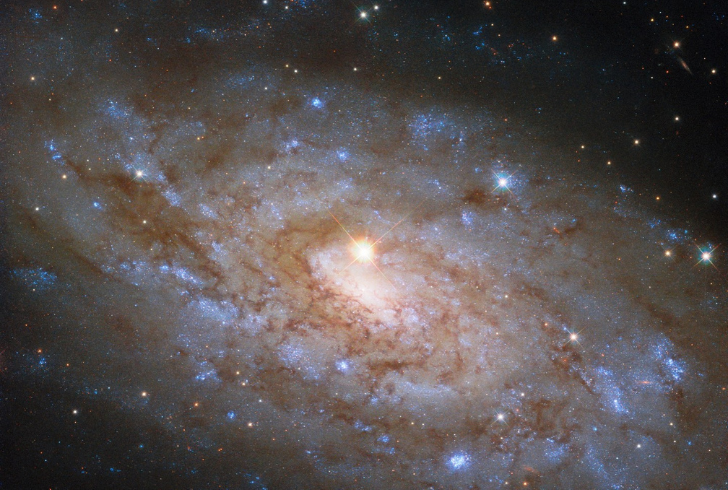
Instagram | nasahubble | Observations of the galactic center’s unusually massive and young stars support the study’s predictions.

Interestingly, the study’s predictions line up with what astronomers have already observed in the galactic center. Many stars there are unusually massive and appear younger than expected. If low-mass stars can’t survive the intense energy environment, only larger ones would remain, making the population appear skewed. And if fusion has slowed or ceased, these stars would still look young despite their age.

Still, the models are based on average orbital distances, not the pulsating energy changes a real star would experience as it moves through different dark matter densities. Future simulations might use real orbital data to produce more accurate insights.

The Possibility of Eternal Stars

If dark matter annihilation is truly at play, it could mean some stars are living in a permanent energetic balance—no longer aging in the conventional sense. This doesn’t just tweak the edges of astrophysics; it raises questions about how stars are categorized and understood.

With more powerful telescopes and long-term observations, astronomers may soon be able to confirm whether these “dark main sequence” stars are real. If they are, it would mark a fundamental shift in the science of how stars live—and how long they can last.

Stars May Not All Follow the Same Rules

What fuels a star has always seemed straightforward—gravity, pressure, and nuclear fusion. But deep in the galactic core, stars may be getting their life force from something far more elusive. The potential presence of dark matter–powered stars opens up an unexpected dimension of astrophysics.

While this theory needs more observational support, it’s already offering possible explanations for the mysterious, massive, and oddly youthful stars seen circling the Milky Way’s black hole.


Previous page | Next page

you may like

taboola

taboola

taboola

More from

A Sagittarius Spiritual Energy Guide for Inner Peace And Self-Discovery

Your Weekly Horoscope – 1 to 7 December, 2025

Sagittarius Personality Traits — Strengths, Weaknesses & Compatibility

Your Weekly Horoscope – 24 to 30 November, 2025

Jupiter Astrology Guide - Luck, Expansion & Life Influence

You May Also Like

A Sagittarius Spiritual Energy Guide for Inner Peace And Self-Discovery

Read More

Your Weekly Horoscope – 1 to 7 December, 2025

Read More

Sagittarius Personality Traits — Strengths, Weaknesses & Compatibility

Read More

Your Weekly Horoscope – 24 to 30 November, 2025

Read More

Jupiter Astrology Guide - Luck, Expansion & Life Influence

Read More

you also may

like

How the 'Anti-Social' Supernova Explosion SN 2024bch Debunks Science

Read More

you also may

like

Discovery of Ice Around Baby Stars Offers Clues to Earth’s Water Origins

Read More

you also may

like

How Do Some Stars Grow So Large? The Science of Cosmic Giants

Read More

in the same category

  • Stars

How the 'Anti-Social' Supernova Explosion SN 2024bch Debunks Science

Read More

Discovery of Ice Around Baby Stars Offers Clues to Earth’s Water Origins

Read More

How Do Some Stars Grow So Large? The Science of Cosmic Giants

Read More
  • About Us
  • Contact Us
  • Privacy Policy
  • Terms Of Use
Menu
  • About Us
  • Contact Us
  • Privacy Policy
  • Terms Of Use
© 2022 FreeAstrologers.com
  • Stars
  • cosmic
  • meaning
  • Guides
Menu
  • Stars
  • cosmic
  • meaning
  • Guides

© 2022 FreeAstrologers.com