meaning

Jupiter Astrology Guide - Luck, Expansion & Life Influence

Jupiter, the largest planet in our solar system, is a celestial force of expansion, optimism, and opportunity. In astrology, it governs luck, philosophy, personal growth, and faith, shaping the way individuals perceive life and approach challenges. This planet encourages exploration, inspires positivity, and amplifies personal potential. Understanding Jupiter’s influence in a birth chart provides a window into where abundance and guidance flow naturally. What Jupiter Represents in Astrology Jupiter embodies ideals, aspirations, and the quest for meaning. It highlights areas where faith, hope, and philosophy can shape experiences, guiding individuals toward personal growth. Its energy magnifies positivity, humor, curiosity, and light-hearted self-discovery. However, Jupiter’s influence also carries the potential for overconfidence, impractical optimism, or neglect of...
Read More
meaning

The Science Behind ‘Time Expansion’ and How It Affects Your Mind

Time doesn’t always pass at the same pace. Under certain conditions, people experience what psychologists call “time expansion experiences” (TEEs)—moments when seconds feel like minutes. These instances are reported during emergencies, intense concentration, meditation, and even some sporting events. Recent research suggests that the perception of time is far more flexible than commonly assumed, and understanding this phenomenon sheds light on the extraordinary capabilities of the human mind. What Are Time Expansion Experiences? Time expansion experiences occur when the brain slows its perception of events, making moments feel extended. Psychologist Steve Taylor of Leeds Beckett University has spent over a decade investigating these experiences. His research indicates that TEEs are not limited to life-threatening situations. While...
Read More
meaning

Can the Mind Access Future Events?

The mind sometimes delivers experiences that feel uncanny—an intuition that something will occur, or a sudden certainty before events unfold. These flashes raise a possibility: perhaps what we call gut instinct is actually more. Evidence points to the idea that awareness may extend beyond linear time, offering fragments of the future. Today, neuroscience is probing these mysteries with rigor. Precognition, long relegated to folklore or chance, is being tested in lab settings. The research suggests consciousness could draw on information from events that have yet to happen, blurring the line between memory and foresight. Such findings challenge the conventional picture of time as a straight path. The Science Behind Precognition Precognition is considered a form of...
Read More
meaning

5 Practical Ways to Rediscover Purpose in Uncertain Times

Unpredictability is life’s constant companion, and when the world feels especially unsettled—fractured politics, tense social climates, global challenges—it can spark questions about where meaning is rooted. That search often leads not to a grand, all-consuming mission, but to the daily decisions that nurture connection and purpose. Purpose isn’t about arriving at one perfect role or destination—it’s about living in a way that fuels clarity and energy, even when tomorrow is unclear. Small, intentional choices can recast uncertainty as an opening to feel grounded and more fully present. 1. Notice Purpose in Everyday Moments Purpose often grows from simple, daily actions rather than a single life-defining goal. Showing kindness to a neighbor, tending to a garden, volunteering...
Read More
meaning

The Deeper Reality Behind "The Truman Show" and Its Powerful Ending

"The Truman Show" isn’t just a standout '90s drama—it's a razor-sharp commentary on surveillance culture, media obsession, and the cost of living under constant scrutiny. Directed by Peter Weir and starring Jim Carrey in a rare dramatic role, the film tells a story that still hits hard today, especially in an age where personal privacy feels more optional than protected. Released in 1998, "The Truman Show" foresaw a world not unlike ours—where real life gets filtered through a lens for public consumption, and entertainment blurs the line between genuine and artificial. A World Built on Illusion Truman Burbank lives in the pristine town of Seahaven, a place that looks picture-perfect but is anything but real. From...
Read More
meaning

What the Good Life Really Looks Like

What does it really mean to live the good life? For decades, mental health research has zeroed in on what goes wrong—studying disorders, diagnoses, and treatments. But for Luke Kalb (PhD ’17, MHS ’08), an associate professor of Mental Health at the Bloomberg School of Public Health, there’s more to the story. His research pushes beyond managing illness and explores what helps people flourish. Instead of only asking how to fix mental distress, he’s asking what builds a life worth living for the majority of people who aren’t in crisis. Kalb's work focuses on an often-overlooked area of public health: positive mental well-being. “Roughly 20% of Americans will experience a psychiatric disorder in their lifetime,” he...
Read More

Why Steve Jobs Chose the Name “Apple” for His Company

December 26, 2025
Helen Hayward

Few brand names in technology spark as much curiosity as Apple. Surrounded by competitors with technical or abstract titles—Microsoft, IBM, NVIDIA, AMD—Apple feels different.

The name sounds familiar, friendly, and even a little unexpected for a company that reshaped modern computing. That contrast raises a natural question: was the name Apple chosen for a hidden meaning, or was it simply a decision that felt right at the time?

The Beginning of Apple Computer, Inc.

The answer starts in 1976. On April 1 of that year, college dropouts and longtime friends Steve Jobs and Steve Wozniak founded Apple Computer, Inc. Their goal was clear and practical. At the time, computers were massive machines that filled entire rooms and served institutions, not households. Jobs and Wozniak wanted to change that.
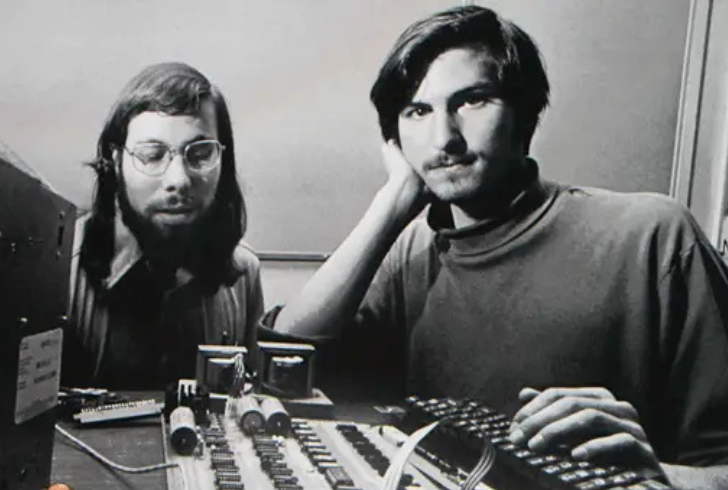
businessinsider.com | Jobs and Wozniak launched Apple in 1976 to create the first household computers.

According to Ann Brashares’ book “Steve Jobs: Thinks Different”, the pair set out to build a computer small and simple enough for everyday use at home and in offices. That vision shaped everything from the hardware to the company’s identity.

They began working out of the Jobs family garage, relying more on determination than resources. The result was the Apple I, a name that immediately tied the product to the company itself.

How the Name “Apple” Came to Be

Despite the lasting impact of the name, it did not begin as a carefully researched branding exercise. Walter Isaacson’s biography “Steve Jobs” offers a direct explanation. Jobs was following a fruitarian diet at the time and had just returned from a visit to what he described as an apple farm. Steve Wozniak later clarified in his autobiography “iWoz: Computer Geek to Cult Icon” that the location was more of a commune than a traditional orchard.

During the drive back from the airport, Jobs suggested the name “Apple Computer.” He believed it sounded “fun, spirited, and not intimidating.” That mattered to a company trying to make computers feel accessible rather than complex or cold.

Early Doubts and a Real Legal Risk

Not everyone was sold on the idea right away. Wozniak had concerns, and they were practical ones. The Beatles already operated Apple Records, owned by Apple Corps. Using a similar name raised the risk of legal trouble.

Those worries turned out to be justified. Apple Computer was later sued by Apple Records for trademark infringement. BusinessWeek reported in 2004 that the case ended in a settlement requiring Apple Computer to pay Apple Corps $80,000. While that figure seems small by today’s standards, it was a serious expense for a young company still finding its footing. Even so, the setback did not slow Apple’s growth.

Other Names That Almost Made the Cut
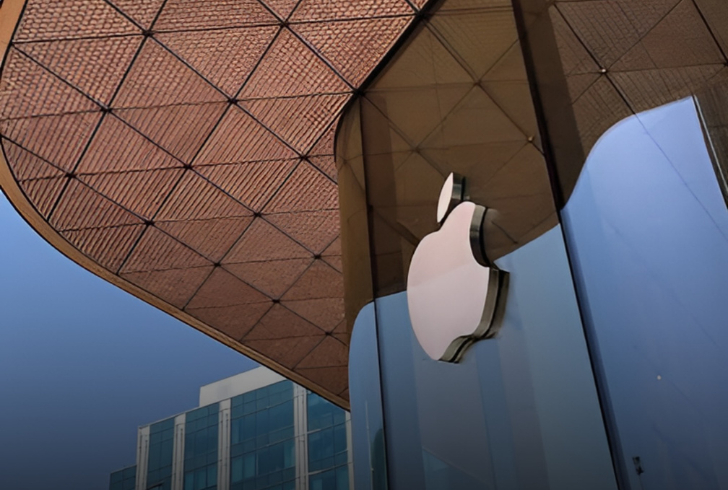
Instagram | marketingmaverick.in | Apple’s unique name created an approachable, memorable brand in a tech-heavy market.

The book “Apple Confidential 2.0” reveals that Jobs and Wozniak did consider alternatives. Several options leaned toward the industry norms of the time, including names like Executex and Matrix Electronics. None of them felt right.

Apple stood out because it did not sound like a technology company. That difference worked in its favor. The name felt approachable, and over time, it became memorable in a crowded market.

The Phone Book Theory

Another explanation surfaced over the years, rooted in practicality rather than philosophy. Phone books played a major role in business visibility during the 1970s. Alphabetical listings meant that a company named Apple would appear ahead of competitors.

Jobs acknowledged this idea during a 1980 presentation. He explained that the name came from his liking for apples and, in part, because Apple appeared before Atari in the phone book. Since Jobs had previously worked at Atari, the comparison was not accidental.

A Name Chosen for Simplicity

When all accounts are considered, the most consistent explanation remains straightforward. Jobs and Wozniak liked the name Apple. It felt friendly, clear, and easy to remember. At a time when the focus was on building a working computer with limited funds, the name did not need layers of symbolism. It just needed to fit.

What began as a simple choice made during a car ride eventually became one of the most recognizable brand names in the world.

Apple’s name reflects the company’s original mindset: technology should feel human and approachable. The choice was not driven by marketing trends or complex strategy. Instead, it came from instinct, timing, and a desire to stand apart without trying too hard. That simplicity continues to shape how the brand is perceived, decades after its start in a garage.


Previous page | Next page

you may like

taboola

taboola

taboola

More from

Your Weekly Horoscope – 29 December to 4 January, 2026

Your Weekly Horoscope – 22 to 28 December, 2025

Why Most of the Universe’s Matter Isn’t in Stars or Galaxies

What Does 2026 Have in Store for Sagittarius?

Your Weekly Horoscope – 15 to 21 December, 2025

You May Also Like

Your Weekly Horoscope – 29 December to 4 January, 2026

Read More

Your Weekly Horoscope – 22 to 28 December, 2025

Read More

Why Most of the Universe’s Matter Isn’t in Stars or Galaxies

Read More

What Does 2026 Have in Store for Sagittarius?

Read More

Your Weekly Horoscope – 15 to 21 December, 2025

Read More

you also may

like

Jupiter Astrology Guide - Luck, Expansion & Life Influence

Read More

you also may

like

The Science Behind ‘Time Expansion’ and How It Affects Your Mind

Read More

you also may

like

Can the Mind Access Future Events?

Read More

in the same category

  • meaning

Jupiter Astrology Guide - Luck, Expansion & Life Influence

Read More

The Science Behind ‘Time Expansion’ and How It Affects Your Mind

Read More

Can the Mind Access Future Events?

Read More
  • About Us
  • Contact Us
  • Privacy Policy
  • Terms Of Use
Menu
  • About Us
  • Contact Us
  • Privacy Policy
  • Terms Of Use
© 2022 FreeAstrologers.com
  • Stars
  • cosmic
  • meaning
  • Guides
Menu
  • Stars
  • cosmic
  • meaning
  • Guides

© 2022 FreeAstrologers.com