Jupiter, the largest planet in our solar system, is a celestial force of expansion, optimism, and opportunity. In astrology, it governs luck, philosophy, personal growth, and faith, shaping the way individuals perceive life and approach challenges. This planet encourages exploration, inspires positivity, and amplifies personal potential. Understanding Jupiter’s influence in a birth chart provides a window into where abundance and guidance flow naturally. What Jupiter Represents in Astrology Jupiter embodies ideals, aspirations, and the quest for meaning. It highlights areas where faith, hope, and philosophy can shape experiences, guiding individuals toward personal growth. Its energy magnifies positivity, humor, curiosity, and light-hearted self-discovery. However, Jupiter’s influence also carries the potential for overconfidence, impractical optimism, or neglect of...
Time doesn’t always pass at the same pace. Under certain conditions, people experience what psychologists call “time expansion experiences” (TEEs)—moments when seconds feel like minutes. These instances are reported during emergencies, intense concentration, meditation, and even some sporting events. Recent research suggests that the perception of time is far more flexible than commonly assumed, and understanding this phenomenon sheds light on the extraordinary capabilities of the human mind. What Are Time Expansion Experiences? Time expansion experiences occur when the brain slows its perception of events, making moments feel extended. Psychologist Steve Taylor of Leeds Beckett University has spent over a decade investigating these experiences. His research indicates that TEEs are not limited to life-threatening situations. While...
The mind sometimes delivers experiences that feel uncanny—an intuition that something will occur, or a sudden certainty before events unfold. These flashes raise a possibility: perhaps what we call gut instinct is actually more. Evidence points to the idea that awareness may extend beyond linear time, offering fragments of the future. Today, neuroscience is probing these mysteries with rigor. Precognition, long relegated to folklore or chance, is being tested in lab settings. The research suggests consciousness could draw on information from events that have yet to happen, blurring the line between memory and foresight. Such findings challenge the conventional picture of time as a straight path. The Science Behind Precognition Precognition is considered a form of...
Unpredictability is life’s constant companion, and when the world feels especially unsettled—fractured politics, tense social climates, global challenges—it can spark questions about where meaning is rooted. That search often leads not to a grand, all-consuming mission, but to the daily decisions that nurture connection and purpose. Purpose isn’t about arriving at one perfect role or destination—it’s about living in a way that fuels clarity and energy, even when tomorrow is unclear. Small, intentional choices can recast uncertainty as an opening to feel grounded and more fully present. 1. Notice Purpose in Everyday Moments Purpose often grows from simple, daily actions rather than a single life-defining goal. Showing kindness to a neighbor, tending to a garden, volunteering...
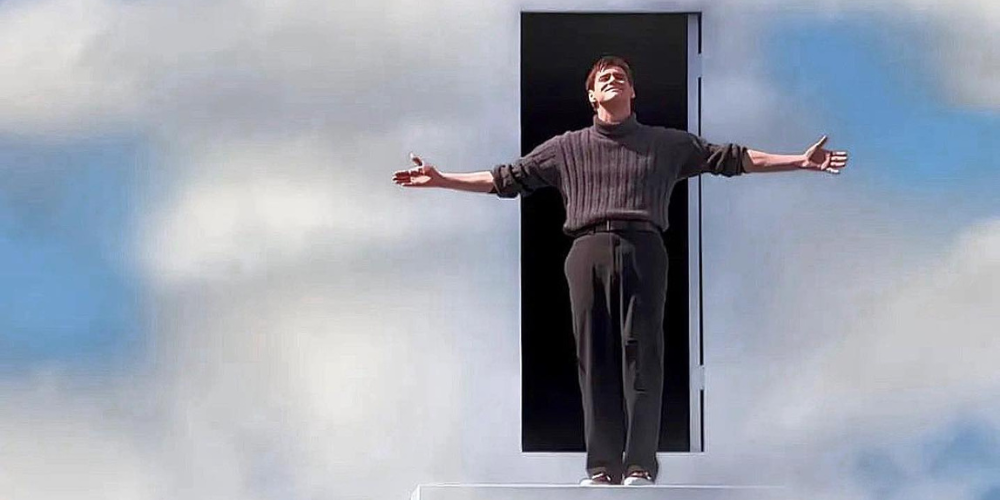
"The Truman Show" isn’t just a standout '90s drama—it's a razor-sharp commentary on surveillance culture, media obsession, and the cost of living under constant scrutiny. Directed by Peter Weir and starring Jim Carrey in a rare dramatic role, the film tells a story that still hits hard today, especially in an age where personal privacy feels more optional than protected. Released in 1998, "The Truman Show" foresaw a world not unlike ours—where real life gets filtered through a lens for public consumption, and entertainment blurs the line between genuine and artificial. A World Built on Illusion Truman Burbank lives in the pristine town of Seahaven, a place that looks picture-perfect but is anything but real. From...
What does it really mean to live the good life? For decades, mental health research has zeroed in on what goes wrong—studying disorders, diagnoses, and treatments. But for Luke Kalb (PhD ’17, MHS ’08), an associate professor of Mental Health at the Bloomberg School of Public Health, there’s more to the story. His research pushes beyond managing illness and explores what helps people flourish. Instead of only asking how to fix mental distress, he’s asking what builds a life worth living for the majority of people who aren’t in crisis. Kalb's work focuses on an often-overlooked area of public health: positive mental well-being. “Roughly 20% of Americans will experience a psychiatric disorder in their lifetime,” he...
What Is Tarot? The Ultimate Guide to Its History, Uses, and Meaning
Tarot cards serve as windows to the soul, illuminating paths through symbolic imagery and profound insights. So, what is tarot? Whether you’re a seasoned enthusiast or a curious newcomer, understanding its rich history and how it is used today can enrich your spiritual journey.
What Is Tarot?
At its core, tarot is a captivating form of guidance utilizing a deck of 78 cards, each bearing unique symbolism and significance. These cards are tools used to delve into the past, present, and future, offering reflections rather than concrete predictions. This reflective nature sets tarot apart from simple fortune-telling. It’s not about foreseeing a fixed future but about exploring potential directions and understanding deeper personal truths.
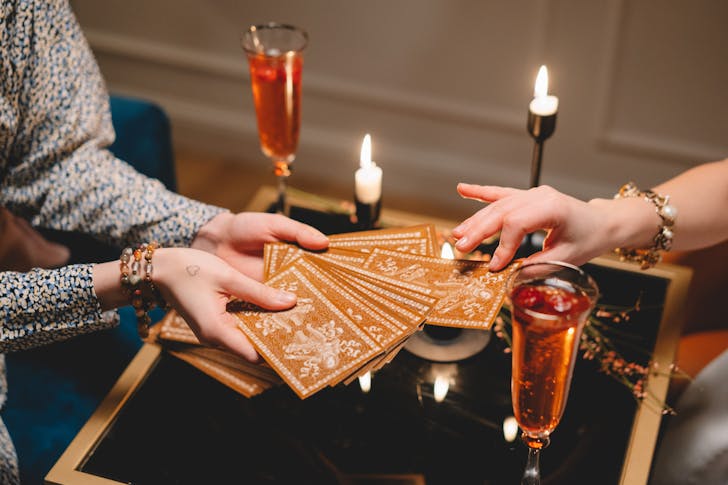
Cottonbro studio | Pexels | Tarot is a captivating form of guidance utilizing a deck of 78 cards, each bearing unique symbolism and significance.
Tarot’s appeal spans various aspects of life, providing clarity on matters like relationships, career choices, and personal growth. Its power lies in the personal interaction between the reader and the cards, which allows for a highly individualized interpretation. The true magic of tarot is its ability to foster self-awareness and personal development.
Historical Origins of Tarot
The origins of tarot cards lead us back to northern Italy in the 15th century, where they first emerged not for mysticism but for play. These early tarot decks were similar to today’s playing cards and were used in games. It wasn’t until the 18th century that their use as a divinatory tool became popular.
The imagery on the cards is believed to draw from a rich tapestry of influences, including ancient Egyptian, Jewish, and Christian mystical traditions. However, some theories attribute their symbolism to the Italian Renaissance’s fascination with the occult. The term “tarot” itself is enigmatic, with possible roots in the Arabic word “tar,” meaning “path,” or the Italian “tarocchi,” referring to a type of playing card.
A Beginner’s Guide to Tarot
Starting with tarot can feel daunting due to its depth and complexity. However, breaking down the basics can demystify the process and open a new world of insight. The tarot deck is divided into the Major Arcana and Minor Arcana, with the former including 22 cards that represent significant life themes and events and the latter comprising 56 cards that depict everyday situations.
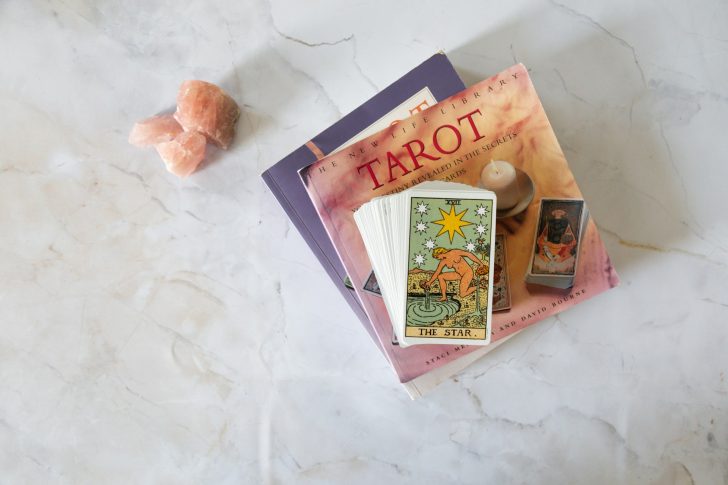
Viva Luna Studios | Unsplash | The tarot deck is divided into the Major Arcana and Minor Arcana, with the former including 22 cards and the latter comprising 56 cards.
Choosing and Understanding Your Deck
To embark on your tarot journey, select a deck that resonates with you. The iconic Rider-Waite tarot deck is a popular choice for beginners due to its clear symbolism. Spend time connecting with your deck, understanding the imagery and meanings of each card. This connection is foundational to performing meaningful readings.
Conducting Your First Readings
When you feel ready, begin with simple spreads, such as the three-card layout, which can provide insight into the evolution of a situation or your own growth. As you lay out the cards, focus on their imagery and your intuitive response to them. Over time, this practice will help you develop a more nuanced understanding of the cards and their messages.
Interpreting Tarot Card Meanings
Interpreting tarot involves more than memorizing card meanings—it requires a deep engagement with the imagery and an openness to intuitive insights. Pay attention to the details in the images; even subtle symbols can dramatically alter a card’s message. Reflect on how the cards interact with each other and consider their positions within your spread to glean a comprehensive view of their guidance.

Freepik | Interpreting tarot involves more than memorizing card meanings—it requires a deep engagement with the imagery and an openness to intuitive insights.
The Role of Intuition in Tarot Reading
Intuition is indispensable in tarot readings. It enriches the interpretative process by enabling a personal connection to the cards’ messages. Developing your intuitive abilities can enhance the relevance and power of your readings, making them more resonant and helpful.
By understanding what tarot is and how it functions not just as a divinatory tool but as a medium for personal insight and growth, you can begin to unlock its potential. Each card and spread offers a unique pathway to understanding life’s complex tapestry, making tarot a valuable companion on your spiritual journey.