Jupiter, the largest planet in our solar system, is a celestial force of expansion, optimism, and opportunity. In astrology, it governs luck, philosophy, personal growth, and faith, shaping the way individuals perceive life and approach challenges. This planet encourages exploration, inspires positivity, and amplifies personal potential. Understanding Jupiter’s influence in a birth chart provides a window into where abundance and guidance flow naturally. What Jupiter Represents in Astrology Jupiter embodies ideals, aspirations, and the quest for meaning. It highlights areas where faith, hope, and philosophy can shape experiences, guiding individuals toward personal growth. Its energy magnifies positivity, humor, curiosity, and light-hearted self-discovery. However, Jupiter’s influence also carries the potential for overconfidence, impractical optimism, or neglect of...
Time doesn’t always pass at the same pace. Under certain conditions, people experience what psychologists call “time expansion experiences” (TEEs)—moments when seconds feel like minutes. These instances are reported during emergencies, intense concentration, meditation, and even some sporting events. Recent research suggests that the perception of time is far more flexible than commonly assumed, and understanding this phenomenon sheds light on the extraordinary capabilities of the human mind. What Are Time Expansion Experiences? Time expansion experiences occur when the brain slows its perception of events, making moments feel extended. Psychologist Steve Taylor of Leeds Beckett University has spent over a decade investigating these experiences. His research indicates that TEEs are not limited to life-threatening situations. While...
The mind sometimes delivers experiences that feel uncanny—an intuition that something will occur, or a sudden certainty before events unfold. These flashes raise a possibility: perhaps what we call gut instinct is actually more. Evidence points to the idea that awareness may extend beyond linear time, offering fragments of the future. Today, neuroscience is probing these mysteries with rigor. Precognition, long relegated to folklore or chance, is being tested in lab settings. The research suggests consciousness could draw on information from events that have yet to happen, blurring the line between memory and foresight. Such findings challenge the conventional picture of time as a straight path. The Science Behind Precognition Precognition is considered a form of...
Unpredictability is life’s constant companion, and when the world feels especially unsettled—fractured politics, tense social climates, global challenges—it can spark questions about where meaning is rooted. That search often leads not to a grand, all-consuming mission, but to the daily decisions that nurture connection and purpose. Purpose isn’t about arriving at one perfect role or destination—it’s about living in a way that fuels clarity and energy, even when tomorrow is unclear. Small, intentional choices can recast uncertainty as an opening to feel grounded and more fully present. 1. Notice Purpose in Everyday Moments Purpose often grows from simple, daily actions rather than a single life-defining goal. Showing kindness to a neighbor, tending to a garden, volunteering...
"The Truman Show" isn’t just a standout '90s drama—it's a razor-sharp commentary on surveillance culture, media obsession, and the cost of living under constant scrutiny. Directed by Peter Weir and starring Jim Carrey in a rare dramatic role, the film tells a story that still hits hard today, especially in an age where personal privacy feels more optional than protected. Released in 1998, "The Truman Show" foresaw a world not unlike ours—where real life gets filtered through a lens for public consumption, and entertainment blurs the line between genuine and artificial. A World Built on Illusion Truman Burbank lives in the pristine town of Seahaven, a place that looks picture-perfect but is anything but real. From...
What does it really mean to live the good life? For decades, mental health research has zeroed in on what goes wrong—studying disorders, diagnoses, and treatments. But for Luke Kalb (PhD ’17, MHS ’08), an associate professor of Mental Health at the Bloomberg School of Public Health, there’s more to the story. His research pushes beyond managing illness and explores what helps people flourish. Instead of only asking how to fix mental distress, he’s asking what builds a life worth living for the majority of people who aren’t in crisis. Kalb's work focuses on an often-overlooked area of public health: positive mental well-being. “Roughly 20% of Americans will experience a psychiatric disorder in their lifetime,” he...
How to Reach Nirvana and How It Works
Have you ever wondered what it really takes to reach a state of complete peace and understanding? In Buddhist philosophy, this state is known as “nirvana”—an ultimate freedom from suffering and a profound realization of the universe’s true nature. While the concept may seem elusive, the path to nirvana is well articulated through the teachings of Buddha. Have you been wondering how to reach nirvana? This comprehensive guide will explore the ins and outs of how nirvana works.
What Is Nirvana?
Nirvana is often described as the ultimate goal of Buddhism, a state where the individual achieves complete liberation from suffering and the continuous cycle of rebirth. It is not just a place or a destination but a profound realization and transformation of the mind. Achieving nirvana means understanding the universe’s true nature, free from the veils of ignorance and attachment that bind us to worldly suffering.
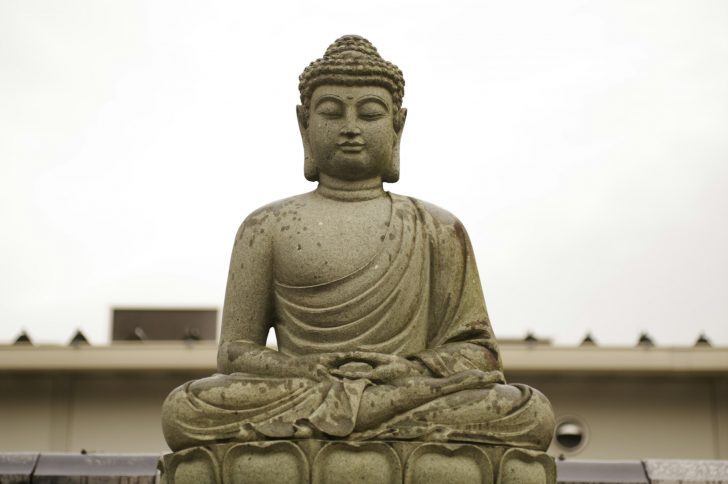
Hiroshi Tsubono | Unsplash | The path to nirvana is well articulated through the teachings of Buddha.
How to Reach Nirvana: Embracing the Noble Eightfold Path
The first step to reach nirvana is understanding and accepting the Four Noble Truths taught by the Buddha. These truths serve as the foundation for all Buddhist teaching and are crucial for anyone seeking enlightenment:
- Life is suffering: Acknowledging that suffering is an inherent part of existence.
- The cause of suffering is ignorance: Recognizing that suffering stems from misunderstanding the universe’s true nature.
- Ending suffering: Realizing that it’s possible to end suffering by overcoming ignorance and attachment.
- The path to ending suffering: Following the Noble Eightfold Path.

Prasanth Inturi | Pexels | The first step to reaching nirvana is understanding and accepting the Four Noble Truths taught by the Buddha.
The Noble Eightfold Path provides a practical guide to ethical and mental development to free the individual from attachments and delusions; it leads to the understanding needed to attain nirvana. The path consists of:
- Right views: Understanding the nature of reality and the path of practice.
- Right intention: Committing to ethical and mental self-improvement.
- Right speech: Speaking truthfully and harmlessly.
- Right action: Engaging in behaviors that do not harm others.
- Right livelihood: Choosing a profession that does not harm others.
- Right effort: Cultivating positive states of mind; freeing oneself from evil and unwholesome states.
- Right mindfulness: Developing awareness of the body, sensations, feelings, and states of mind.
- Right concentration: Developing the mental focus necessary for this awareness.
The Role of Meditation in Achieving Nirvana
Meditation, or dhyana, is central to the Buddhist practice of reaching nirvana. Through meditation, practitioners develop the concentration, clarity, emotional positivity, and calm necessary to see the true nature of the universe. It’s a tool to cultivate key aspects of the path, such as the right mindfulness and right concentration.
Nirvana in Everyday Life
While traditionally, achieving nirvana might seem reserved for monks and spiritual leaders, the principles of the Noble Eightfold Path can be integrated into the daily lives of lay Buddhists. By practicing mindfulness, ethical conduct, and meditation, even those not in monastic life can cultivate the qualities necessary for enlightenment and prepare themselves for higher existences, potentially leading to nirvana in future lives.

Conclusion
Achieving nirvana is not about withdrawing from the world but engaging with it more fully, with compassion, patience, and joy. It is a journey of transforming perception and understanding, accessible to anyone willing to walk the path. Whether one becomes a Buddha or an arhat, the essential goal remains the same: to overcome suffering and achieve a deep, lasting peace. This is the heart of the Buddhist path, a profound journey of religious observance, personal discovery, and transformation.