cosmic

Sagittarius Personality Traits — Strengths, Weaknesses & Compatibility

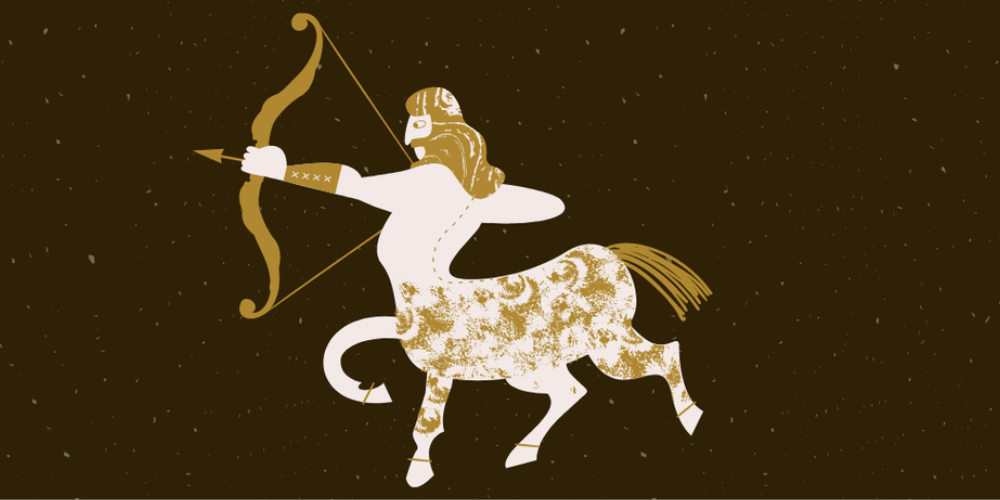
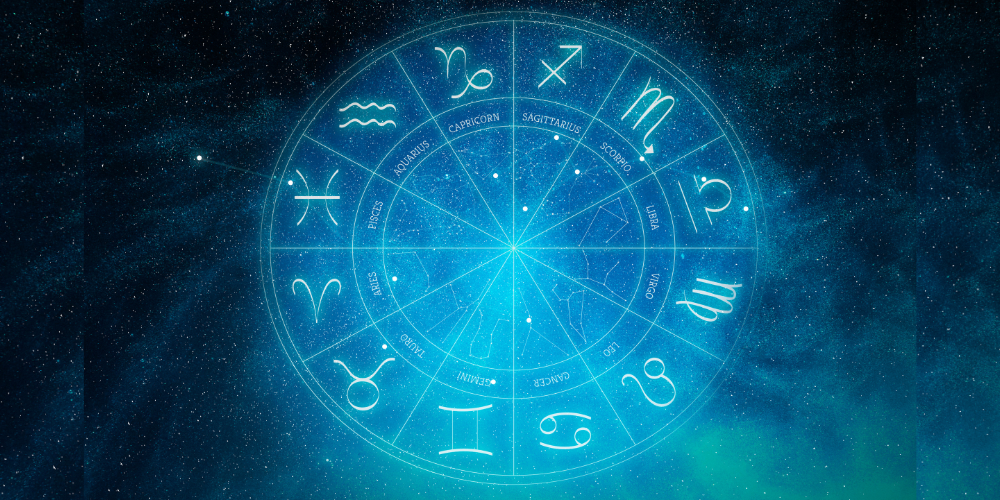
There’s something magnetic about Sagittarius. This zodiac sign, active from November 22 to December 21, carries a spark that feels instantly recognizable—bold, curious, and constantly on the move. Sagittarius blends passion, intensity, and flexibility in a way that sets them apart. Their symbol, the archer, reflects a spirit that shoots toward distant horizons, eager to uncover meaning in places many people would skip. From remote rivers to historic sites filled with forgotten stories, Sagittarius pursues knowledge with an energy that rarely slows down. The Core Nature of Sagittarius Sagittarius is the final fire sign, and its traits burn with motion and curiosity. This sign is mutable, which explains its constant pull toward change and exploration. Freedom...
Read More
cosmic

Rampaging Baboon Nebula Captured in Stunning Deep-Space Image

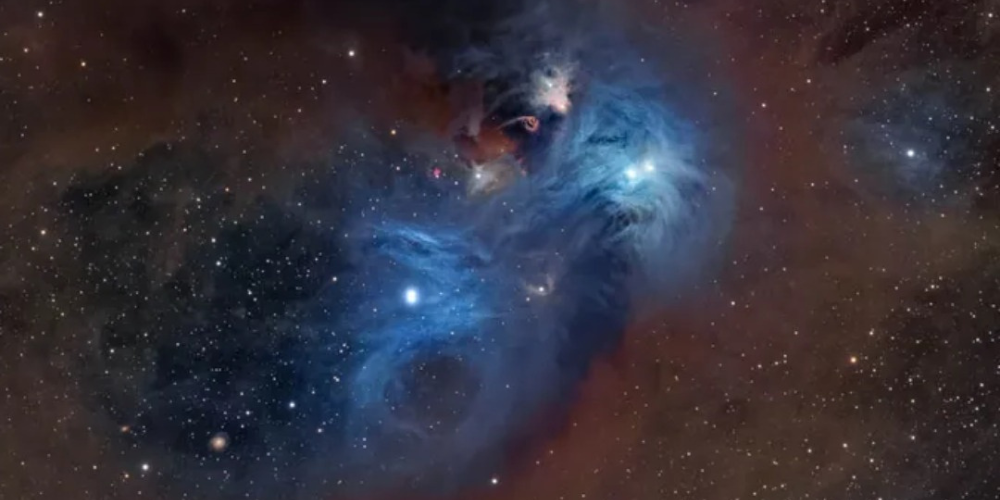
In his newest deep-space image, astrophotographer Greg Meyer turns the cosmos into a canvas. His subject — a nebula shaped like a furious baboon — has been dubbed the Rampaging Baboon Nebula. Streams of gas and dust weave through the frame, glowing in hues that give the scene a startling sense of movement. The photograph spotlights the complex beauty and creative chaos that define our galaxy’s stellar nurseries. A Nebula Like No Other The nebula lies about 500 light-years away in the constellation Corona Australis. Its shape suggests the face of a mandrill, with molecular dust sculpting the mouth and facial contours. The bright blue eyes are created by reflection nebulas that scatter starlight, adding a...
Read More
cosmic

Why Mars’ Mantle Holds Clues to 4.5 Billion Years of Planetary History

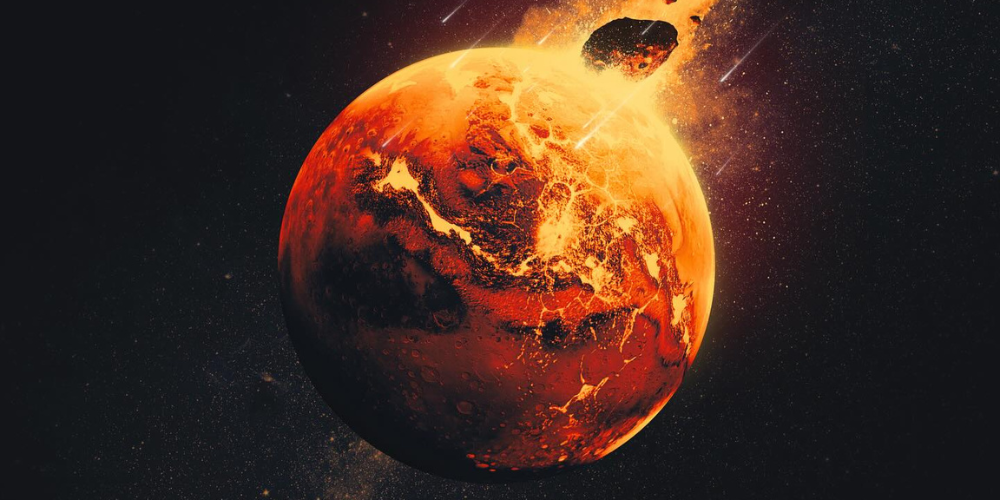
Mars has always been a planet of mystery, but fresh research suggests the Red Planet hides something far more unusual beneath its surface. Instead of a neatly layered interior, scientists have discovered that Mars’ mantle may be filled with giant chunks of rock left over from its violent early years. This finding reshapes the way experts view the inner structure of the planet and offers a rare glimpse into conditions dating back more than 4 billion years. Mars’ Messy Interior When most people think about the inside of a planet, the picture is often a series of tidy layers stacked one on top of another, like a clean geological cake. Mars, however, refuses to fit that...
Read More
cosmic

How Cosmic Rays May Be the Hidden Spark Behind Lightning

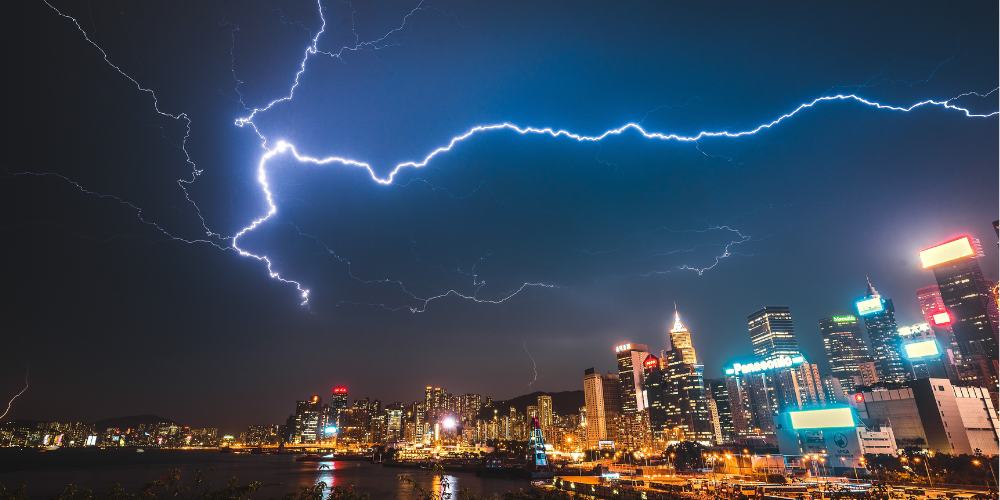
Lightning might seem like a sudden burst from the sky, but the science behind it runs deep—and recent research has added an electrifying twist. Scientists have long known that thunderstorms build electrical charges until they discharge in brilliant flashes of lightning. What’s new is the evidence pointing to an unexpected trigger: cosmic rays. Researchers at Los Alamos National Laboratory have uncovered clues that suggest lightning may actually start with particles from outer space, opening a fresh angle on this natural phenomenon. A Shift in Understanding Thunderclouds have always been the stage for lightning. Traditional understanding says it begins when opposite charges build up in a storm—positive at the top, negative at the bottom. Once the difference...
Read More
cosmic

Radiation Clash Between Galaxies Shocks Astronomers - Latest Discovery

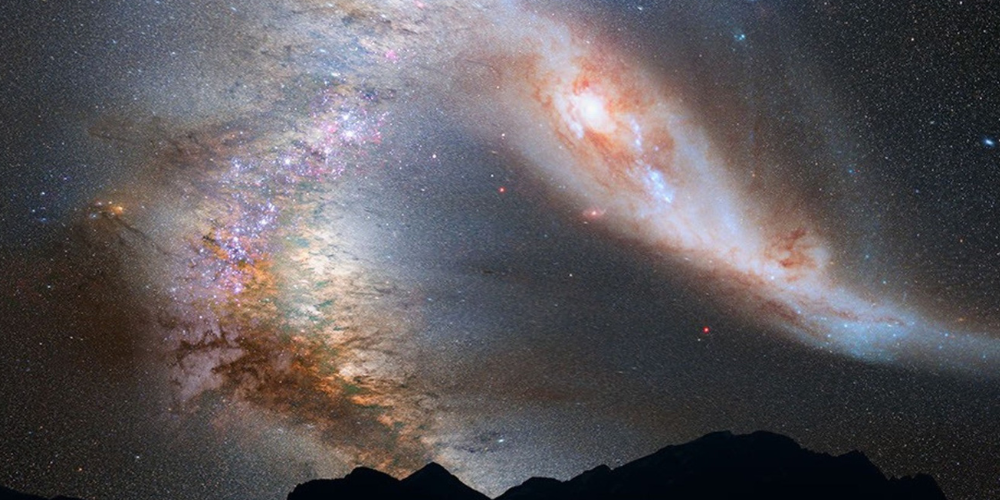
In a groundbreaking observation, astronomers have captured an extraordinary moment in the cosmos—a high-speed, high-stakes confrontation between two galaxies over 11 billion light-years away. This isn’t just any merger. It’s a rare, aggressive event where one galaxy is striking the other with intense quasar radiation, dramatically changing its ability to form new stars. This unprecedented sighting is now offering a deeper look into how galaxies interact, evolve, and sometimes collide with devastating consequences. The "Cosmic Joust"—When Galaxies Collide Researchers used the combined power of ALMA and the Very Large Telescope (VLT) in Chile to observe two galaxies locked in what they describe as a “cosmic joust.” The term goes beyond metaphor—it reflects the actual movement. These...
Read More
cosmic

This ‘Cosmic Radio’ Device May Detect Dark Matter Within 15 Years

While dark matter remains one of the universe’s greatest mysteries, scientists believe they are now one step closer to unlocking its secrets. A new device, creatively dubbed a "cosmic car radio," may soon allow researchers to detect particles believed to make up this invisible force. These elusive particles, called axions, could explain the untraceable gravitational pull influencing stars and galaxies. And now, thanks to groundbreaking research, scientists aim to locate them within just 15 years. What Are Axions and Why Do They Matter? One of the best candidates for dark matter is thought to be axions. These minuscule, lightweight particles behave more like waves, and their effects ripple across the cosmos. Although theorized for decades, scientists...
Read More

Why Rubin Observatory’s Massive Cosmic Images Need a ‘Data Butler’

July 10, 2025
Helen Hayward

The Vera C. Rubin Observatory has officially raised the bar for what “big data” means in astronomy. After releasing its first batch of cosmic images, the observatory isn’t just capturing the night sky—it’s creating one of the most extensive visual datasets humanity has ever seen.

Powered by the world’s largest digital camera, the images are so detailed and expansive that processing them requires not just high-speed networks, but a whole digital ecosystem: seven international data brokers, three massive data centers, and a uniquely named management system called the Data Butler.

The Scale of Rubin’s Cosmic Images
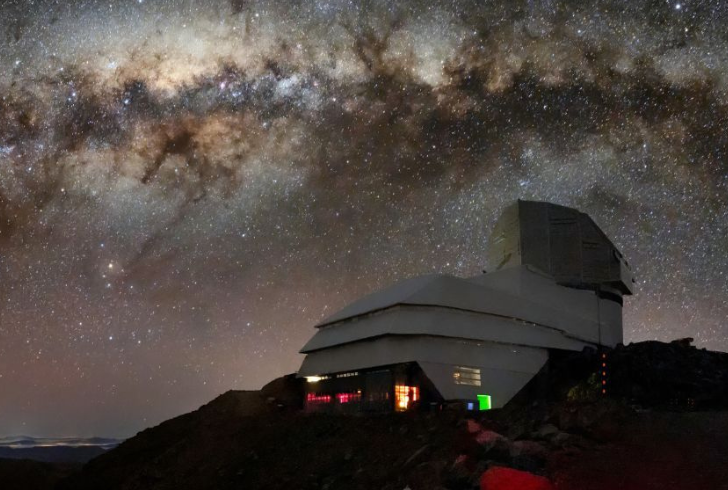
Instagram | rubin_observatory | Rubin Observatory will produce a staggering 20 terabytes of data and 10 million alerts each night.

What makes Rubin Observatory’s contribution truly staggering is the sheer volume and precision of the data it collects. Once it enters full operation, the observatory will generate 20 terabytes of data each night, issuing around 10 million alerts to astronomers. These alerts aren’t casual notifications—they’re potential discoveries like supernovas, moving asteroids, or transient cosmic events that require immediate scientific attention.

Rubin’s camera doesn’t just take pictures—it creates a high-definition, time-lapse map of the universe. Over a 10-year survey called the Legacy Survey of Space and Time (LSST), Rubin will accumulate about 500 petabytes of data. To give that some scale: it’s roughly the same as half a million 4K Blu-ray discs.

How the Data Moves and Who Handles It

The Rubin Observatory sits high on a mountaintop in Chile, offering a clear view of the Southern Hemisphere sky. After capturing the data, the system sends it through a dedicated fiber link to the SLAC National Accelerator Laboratory in California.

From there, the team replicates and distributes the data to the IN2P3 center in France and a U.K.-based network, allowing for global collaboration and reliable backup.

1. SLAC handles 35% of the data processing

2. IN2P3 manages 40%

3. The U.K. system processes the remaining 25%

Each center supports one another to avoid delays or data loss, a crucial strategy when dealing with alerts that need fast response.

What Is the “Data Butler”?

With cosmic images this large, astronomers can’t simply “download a file” and start working. The dataset is too vast for that kind of interaction. That’s where the Data Butler steps in. Think of it as a hyper-organized digital concierge that tracks every image by time, location, object, and even what the camera was focused on.

It gives researchers the ability to search using specific astronomy terms—coordinates, object types, timescales—without needing to know where the files are stored or how they’re labeled. This makes Rubin’s data not only searchable but useful in real time, especially for spotting fleeting cosmic phenomena.

Brokers: Filtering Millions of Alerts

With 10 million alerts every night, how can any astronomer possibly keep up? That’s the job of seven data brokers, each based in different parts of the world. These systems act like smart filters, sorting the massive influx of data into manageable chunks based on what specific scientists are looking for.

Examples include:

ALeRCE in Chile, using machine learning to classify events

ANTARES in the U.S., designed for quick-response alerts

Lasair in the U.K., specializing in short-lived cosmic transients

Some brokers rely on AI, while others stick to proven modeling systems. Astronomers sign up to a broker, define their interest areas, and receive only relevant alerts—sometimes just two or three out of millions.

Why These Cosmic Images Matter
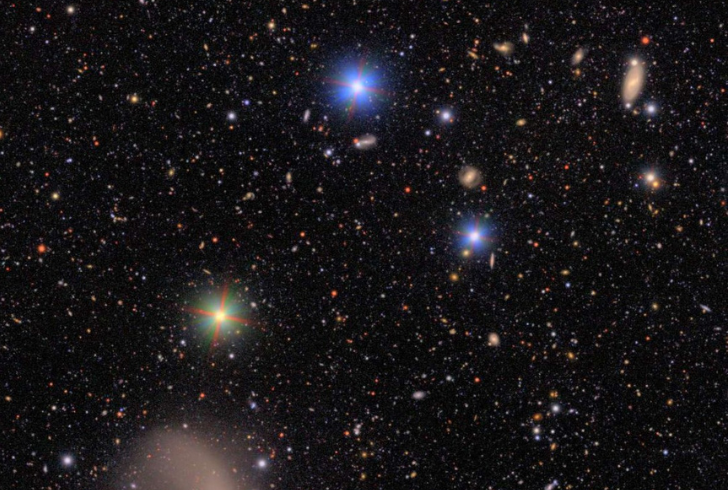
Instagram | rubin_observatory | Rubin’s cosmic images are key to deciphering dynamic cosmic processes.

The cosmic images Rubin collects are more than beautiful snapshots. They’re key to understanding dynamic processes in the universe—kilonovas, supernovas, gravitational waves, even unidentified phenomena. These datasets will remain useful for decades, possibly outliving the current generation of scientists working on them.

The Rubin Observatory surveys a quarter of the Southern Hemisphere sky every single night. It doesn’t miss a thing. That level of consistency allows researchers to spot patterns, changes, and rare events that would otherwise go unnoticed.

And yet, Rubin isn’t the final chapter in data-heavy astronomy. Teams are already applying the lessons from Rubin to projects like the Square Kilometre Array (SKA)—a massive radio telescope initiative that will dwarf even Rubin’s colossal data output.

Why Rubin’s Data Is Just the Beginning

The Rubin Observatory is changing how astronomy works. Instead of simply watching the sky, it actively tracks and responds every night. Its cosmic images come with incredible detail, scale, and speed, reshaping the way we explore space. Today, Rubin leads the charge. However, the tools and systems built around it are also laying the foundation for future missions.

These aren’t ordinary images. They’re signals from the farthest reaches of time and space. Thanks to the Data Butler and its powerful network, astronomers now have the ability to capture, sort, and respond faster than ever.


Previous page | Next page

you may like

taboola

taboola

taboola

More from

A Sagittarius Spiritual Energy Guide for Inner Peace And Self-Discovery

Your Weekly Horoscope – 1 to 7 December, 2025

Sagittarius Personality Traits — Strengths, Weaknesses & Compatibility

Your Weekly Horoscope – 24 to 30 November, 2025

Jupiter Astrology Guide - Luck, Expansion & Life Influence

You May Also Like

A Sagittarius Spiritual Energy Guide for Inner Peace And Self-Discovery

Read More

Your Weekly Horoscope – 1 to 7 December, 2025

Read More

Sagittarius Personality Traits — Strengths, Weaknesses & Compatibility

Read More

Your Weekly Horoscope – 24 to 30 November, 2025

Read More

Jupiter Astrology Guide - Luck, Expansion & Life Influence

Read More

you also may

like

Sagittarius Personality Traits — Strengths, Weaknesses & Compatibility

Read More

you also may

like

Rampaging Baboon Nebula Captured in Stunning Deep-Space Image

Read More

you also may

like

Why Mars’ Mantle Holds Clues to 4.5 Billion Years of Planetary History

Read More

in the same category

  • cosmic

Sagittarius Personality Traits — Strengths, Weaknesses & Compatibility

Read More

Rampaging Baboon Nebula Captured in Stunning Deep-Space Image

Read More

Why Mars’ Mantle Holds Clues to 4.5 Billion Years of Planetary History

Read More
  • About Us
  • Contact Us
  • Privacy Policy
  • Terms Of Use
Menu
  • About Us
  • Contact Us
  • Privacy Policy
  • Terms Of Use
© 2022 FreeAstrologers.com
  • Stars
  • cosmic
  • meaning
  • Guides
Menu
  • Stars
  • cosmic
  • meaning
  • Guides

© 2022 FreeAstrologers.com