cosmic

Sagittarius Personality Traits — Strengths, Weaknesses & Compatibility

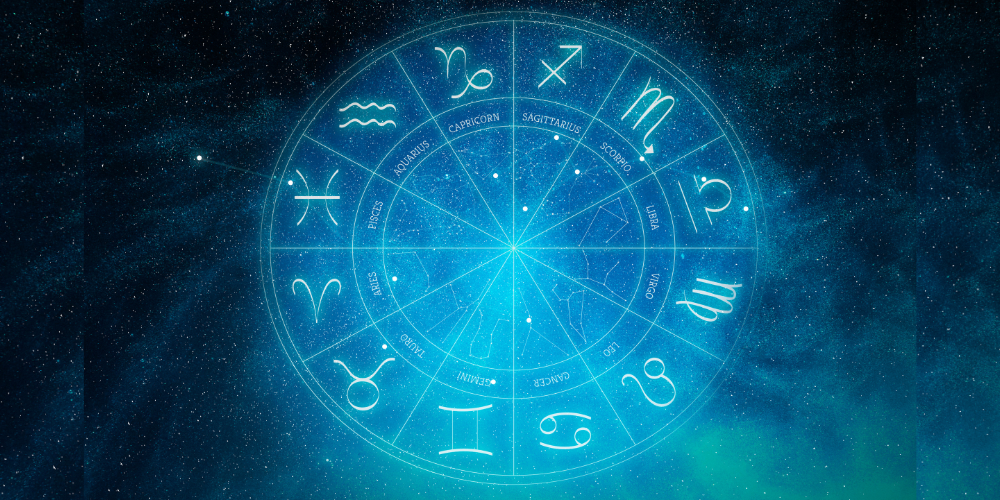
There’s something magnetic about Sagittarius. This zodiac sign, active from November 22 to December 21, carries a spark that feels instantly recognizable—bold, curious, and constantly on the move. Sagittarius blends passion, intensity, and flexibility in a way that sets them apart. Their symbol, the archer, reflects a spirit that shoots toward distant horizons, eager to uncover meaning in places many people would skip. From remote rivers to historic sites filled with forgotten stories, Sagittarius pursues knowledge with an energy that rarely slows down. The Core Nature of Sagittarius Sagittarius is the final fire sign, and its traits burn with motion and curiosity. This sign is mutable, which explains its constant pull toward change and exploration. Freedom...
Read More
cosmic

Rampaging Baboon Nebula Captured in Stunning Deep-Space Image

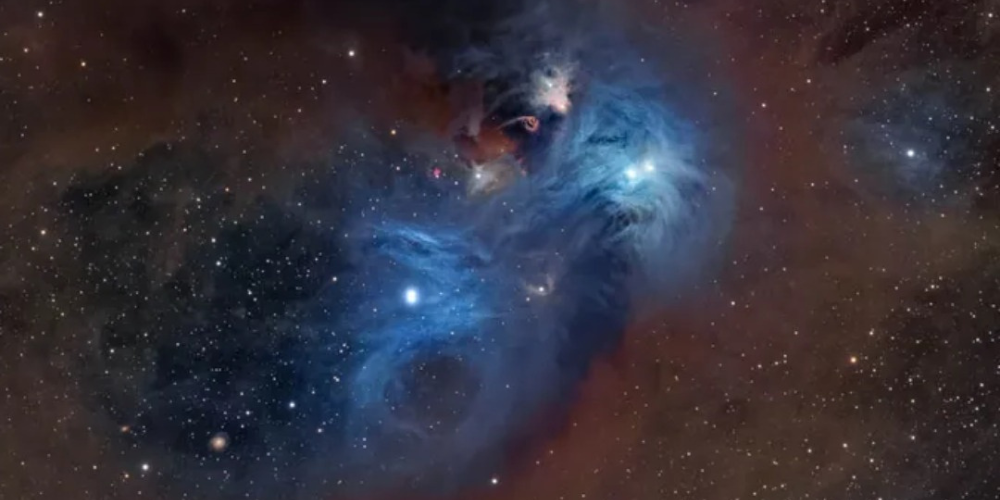
In his newest deep-space image, astrophotographer Greg Meyer turns the cosmos into a canvas. His subject — a nebula shaped like a furious baboon — has been dubbed the Rampaging Baboon Nebula. Streams of gas and dust weave through the frame, glowing in hues that give the scene a startling sense of movement. The photograph spotlights the complex beauty and creative chaos that define our galaxy’s stellar nurseries. A Nebula Like No Other The nebula lies about 500 light-years away in the constellation Corona Australis. Its shape suggests the face of a mandrill, with molecular dust sculpting the mouth and facial contours. The bright blue eyes are created by reflection nebulas that scatter starlight, adding a...
Read More
cosmic

Why Mars’ Mantle Holds Clues to 4.5 Billion Years of Planetary History

Mars has always been a planet of mystery, but fresh research suggests the Red Planet hides something far more unusual beneath its surface. Instead of a neatly layered interior, scientists have discovered that Mars’ mantle may be filled with giant chunks of rock left over from its violent early years. This finding reshapes the way experts view the inner structure of the planet and offers a rare glimpse into conditions dating back more than 4 billion years. Mars’ Messy Interior When most people think about the inside of a planet, the picture is often a series of tidy layers stacked one on top of another, like a clean geological cake. Mars, however, refuses to fit that...
Read More
cosmic

How Cosmic Rays May Be the Hidden Spark Behind Lightning

Lightning might seem like a sudden burst from the sky, but the science behind it runs deep—and recent research has added an electrifying twist. Scientists have long known that thunderstorms build electrical charges until they discharge in brilliant flashes of lightning. What’s new is the evidence pointing to an unexpected trigger: cosmic rays. Researchers at Los Alamos National Laboratory have uncovered clues that suggest lightning may actually start with particles from outer space, opening a fresh angle on this natural phenomenon. A Shift in Understanding Thunderclouds have always been the stage for lightning. Traditional understanding says it begins when opposite charges build up in a storm—positive at the top, negative at the bottom. Once the difference...
Read More
cosmic

Why Rubin Observatory’s Massive Cosmic Images Need a 'Data Butler'

The Vera C. Rubin Observatory has officially raised the bar for what “big data” means in astronomy. After releasing its first batch of cosmic images, the observatory isn't just capturing the night sky—it's creating one of the most extensive visual datasets humanity has ever seen. Powered by the world’s largest digital camera, the images are so detailed and expansive that processing them requires not just high-speed networks, but a whole digital ecosystem: seven international data brokers, three massive data centers, and a uniquely named management system called the Data Butler. The Scale of Rubin’s Cosmic Images What makes Rubin Observatory's contribution truly staggering is the sheer volume and precision of the data it collects. Once it...
Read More
cosmic

Radiation Clash Between Galaxies Shocks Astronomers - Latest Discovery

In a groundbreaking observation, astronomers have captured an extraordinary moment in the cosmos—a high-speed, high-stakes confrontation between two galaxies over 11 billion light-years away. This isn’t just any merger. It’s a rare, aggressive event where one galaxy is striking the other with intense quasar radiation, dramatically changing its ability to form new stars. This unprecedented sighting is now offering a deeper look into how galaxies interact, evolve, and sometimes collide with devastating consequences. The "Cosmic Joust"—When Galaxies Collide Researchers used the combined power of ALMA and the Very Large Telescope (VLT) in Chile to observe two galaxies locked in what they describe as a “cosmic joust.” The term goes beyond metaphor—it reflects the actual movement. These...
Read More

This ‘Cosmic Radio’ Device May Detect Dark Matter Within 15 Years

May 2, 2025
Helen Hayward

While dark matter remains one of the universe’s greatest mysteries, scientists believe they are now one step closer to unlocking its secrets. A new device, creatively dubbed a “cosmic car radio,” may soon allow researchers to detect particles believed to make up this invisible force. These elusive particles, called axions, could explain the untraceable gravitational pull influencing stars and galaxies.

And now, thanks to groundbreaking research, scientists aim to locate them within just 15 years.

What Are Axions and Why Do They Matter?

One of the best candidates for dark matter is thought to be axions. These minuscule, lightweight particles behave more like waves, and their effects ripple across the cosmos. Although theorized for decades, scientists still don’t know their exact location on the electromagnetic spectrum.

Possibilities stretch from kilohertz—within human hearing range—to terahertz, a frequency much higher than typical radio waves. Researchers believe that by tuning into the correct frequency, they could pick up the axion’s signal, much like adjusting a radio to a specific station.

A New Detector Aims to Tune Into the Universe

Axions

Instagram | @uncoverreality_ | Dark matter may be composed of axions, tiny wave-like particles yet to be located on the EM spectrum.

This novel technology, called an Axion Quasiparticle (AQ) detector, has been designed to match the frequency of the axion. Once it aligns with the axion’s wave, the detector will emit a faint glow of light—a signal that scientists have been seeking for decades.

Dr. David Marsh from King’s College London explained, “We now have the tools to build a dark matter detector that scans the galaxy’s frequencies until it finds the axion. The idea is there; the next step is to scale it up.

Building the Future of Cosmic Discovery

A substance called manganese bismuth telluride (MnBi₂Te₄) is the scientific basis for AQ. Researchers layered this compound into ultra-thin, two-dimensional sheets to enhance its properties. This allowed it to become highly sensitive to potential axion signals.

Jian-Xiang Qiu of Harvard University, one of the lead researchers, noted, “We had to strip it down to atomic layers to properly control its behavior. That’s how we began seeing interesting physics unfold and how it might interact with axions.”

Project Timeline and Key Milestones

The team has already created the foundational materials for this detector. They now plan to:

1. Expand the AQ material – Over the next five years, researchers aim to produce a larger and more sensitive version of the current prototype.
2. Scan terahertz frequencies – Once the detector is operational, they will begin searching through high-frequency ranges thought to contain axions.
3. Analyze emissions – If the AQ detector picks up matching frequencies, it may emit light, signaling the presence of dark matter.

Dr. Marsh emphasized that this initiative could unlock dark matter secrets within 15 years if the project continues at its current pace.

Why This Matters for Science and Humanity

Detecting axions would represent a milestone comparable to the discovery of the Higgs boson. It would confirm that dark matter is not just theoretical—it’s detectable, traceable, and very real.

According to Dr. Marsh, there are currently as many papers on axions as there were on the Higgs Boson shortly before it was discovered. We know axions act like a frequency, and we finally have the tools to tune in.”

A Turning Point in Dark Matter Research
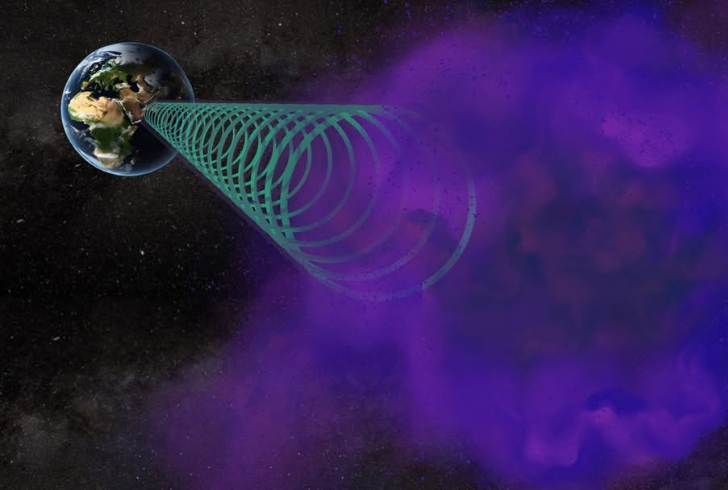
Radio Waves

Instagram | @vt_bot | Scientists now aim to “hear” axions through radio waves to solve dark matter.

Historically, efforts to understand dark matter have run into a wall of invisibility. But this radio-like method adds a layer of simplicity to a complex challenge. Instead of trying to capture an axion physically, scientists will now try to “hear” it across the spectrum.

By using high-frequency materials with fine-tuned properties, researchers can narrow their focus to where axions most likely exist.

What Comes After the Discovery?

If scientists succeed in detecting axions, it could revolutionize how they study the universe. This could lead to:

1. More accurate models of galaxy formation
2. Advanced materials inspired by axion physics
3. Quantum technology built on newfound cosmic principles

The impact won’t stop at science—it could spill into areas like energy research and even communication technologies.

The Countdown Begins

With every layer of manganese bismuth telluride prepared, and every terahertz frequency scanned, scientists get closer to solving a cosmic puzzle. If predictions hold true, this project could finally unveil dark matter, once thought unknowable, and change space science forever.

As researchers push the boundaries of what is observable, they might not just hear the axion… they may end up rewriting the story of the universe itself.


Previous page | Next page

you may like

taboola

taboola

taboola

More from

A Sagittarius Spiritual Energy Guide for Inner Peace And Self-Discovery

Your Weekly Horoscope – 1 to 7 December, 2025

Sagittarius Personality Traits — Strengths, Weaknesses & Compatibility

Your Weekly Horoscope – 24 to 30 November, 2025

Jupiter Astrology Guide - Luck, Expansion & Life Influence

You May Also Like

A Sagittarius Spiritual Energy Guide for Inner Peace And Self-Discovery

Read More

Your Weekly Horoscope – 1 to 7 December, 2025

Read More

Sagittarius Personality Traits — Strengths, Weaknesses & Compatibility

Read More

Your Weekly Horoscope – 24 to 30 November, 2025

Read More

Jupiter Astrology Guide - Luck, Expansion & Life Influence

Read More

you also may

like

Sagittarius Personality Traits — Strengths, Weaknesses & Compatibility

Read More

you also may

like

Rampaging Baboon Nebula Captured in Stunning Deep-Space Image

Read More

you also may

like

Why Mars’ Mantle Holds Clues to 4.5 Billion Years of Planetary History

Read More

in the same category

  • cosmic

Sagittarius Personality Traits — Strengths, Weaknesses & Compatibility

Read More

Rampaging Baboon Nebula Captured in Stunning Deep-Space Image

Read More

Why Mars’ Mantle Holds Clues to 4.5 Billion Years of Planetary History

Read More
  • About Us
  • Contact Us
  • Privacy Policy
  • Terms Of Use
Menu
  • About Us
  • Contact Us
  • Privacy Policy
  • Terms Of Use
© 2022 FreeAstrologers.com
  • Stars
  • cosmic
  • meaning
  • Guides
Menu
  • Stars
  • cosmic
  • meaning
  • Guides

© 2022 FreeAstrologers.com